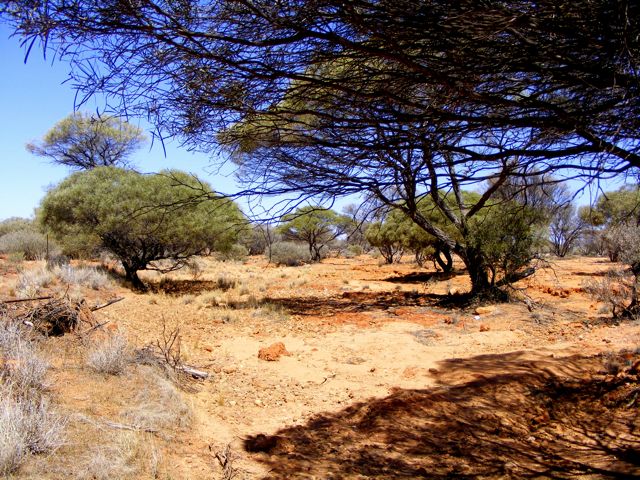
It is strange what sometimes sparks an idea for a story. During Western Australia’s 1890’s gold rush, one of my mother’s great uncles, James McHugh, died of thirst on the Eastern Goldfields, near the place prospectors had ironically named Siberia. His body was identified by his Miner’s Right and another document found on him.[i] When his brother in South Australia saw the press report, he contacted the West Australian police about it. I discovered this letter while researching shipwrecks! It had been misfiled in the Water Police records. I reported it and believe it is now safely filed in the correct place in the W.A. State Records Office.
However, while researching family names on the old newspapers in Trove, I found a report that, some months after James’ body was identified, a man questioned by police gave the false name James McHugh. He was known to police and identified by his own name.[ii] But this set me thinking about how easy identity theft could have been when a man might carry no identification except his Miners Right, the license to search for and claim gold, introduced after anger over the earlier licensing system erupted in violence at the Eureka Stockade. Thereby hangs the fictional tale (working title ‘Gold Dust to Dust’), that I’ve been trying to write over the last year or so.
Meanwhile, I have learned a great deal about that watershed period in Western Australia’s history.

Today, seeing the barren plains, dotted with ghost towns, that surround Kalgoorlie and Boulder, the twin cities of what is still called the Golden Mile, one would suppose that anyone who set out on foot with no air-conditioned, four-wheel-drive vehicle, no refrigeration and only the water he could carry, must have been insane. But most of these men were completely rational, and at least one man had a paper to prove his sanity.
Within weeks after Bailey and Ford struck gold at the place that was to become Coolgardie in June 1892, the rush was on, with men from all over the world converging on the isolated colony and its even more isolated interior. Newchums from Britain and the Australian cities joined tough old veterans of the Victorian and Californian gold rushes, to answer the allure of gold.
Then, in June 1893, Hannan and Flanagan made the rich discovery at what was to become Kalgoorlie. By August 1893, Southern Cross was ‘full of miners en route to Coolgardie and Hannan’s find [Kalgoorlie], with fifteen hundred miners at Hannan’s, four hundred at Coolgardie, and about five hundred prospecting other parts of the fields’.[iii]

But the gold was not always easy to find, and, unlike previous gold rushes, water was even scarcer. Once they left the settled area, prospectors relied on sketchy maps and the surprising generosity of the local Indigenous people, whose land they were ruining and whose sacred sites they were desecrating, to guide them to water. Even veterans sometimes underestimated the semi-desert conditions and from time to time, prospectors would come upon the decaying remains of men who had perished of thirst. The rush to Siberia, north east of Coolgardie was notorious for the deaths that occurred. But even these gruesome finds deterred few of those afflicted by gold fever.
With so many diggers streaming into the new goldfields, it was hard to keep track of them all, and government agencies were soon stretched to the limit. The postal service could barely cope with all the letters and parcels, often simply addressed ‘care of the Post Office, Hannans’. But Hannans or Hannan’s Find, as Kalgoorlie was called at first, was at the centre of a wide area dotted with isolated gold finds, some of which were later to become bustling towns.
Very soon, the police were being asked to trace missing men, but the places prospectors were heading were yet to be found on any map. I remember finding, in Post Office Directories of the time, an address listed as ‘Harder to Find’. I assume it was a humorous name for a gold find, but perhaps it was simply the truth. At best it would have been like trying to find a needle in a haystack, and there were some who didn’t want to be found. A late nineteenth century gold rush, with no phones, no electronic media, few newspapers and very slow travel, was a perfect place to hide from your wife, your creditors, or from the Police themselves.
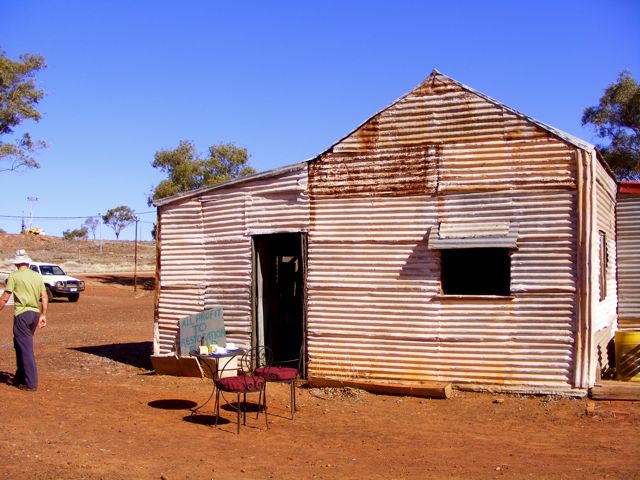
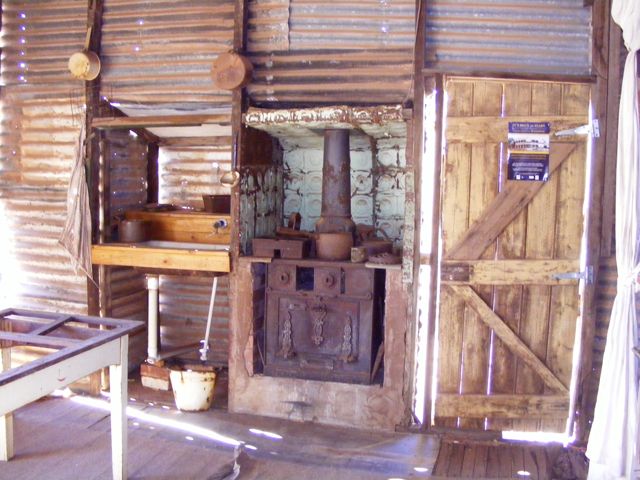
At Hannans, even the Post Office and Police Stations were just tents. The prospectors lived on tinned ‘bully beef’ or kangaroo meat, damper and tea, and the only water had to be bought from men who’d had the foresight to install condensers out at a lake some distance away. At an added cost it could be delivered by camel teams. It was to be another nine years before, thanks to the genius of C Y O’Connor, water was brought the 530 kilometres from Mundaring Weir in the hills near the capital, Perth.
With no water to wash clothes, the men could only try to beat the red dust out of them. Most took Sunday off and tried to tidy up a bit, trimming beards, washing faces and hands and shaving in tiny amounts of water.
This is the world my heroine, Nora Patterson, enters looking for her husband Ned. He had written telling her to come, but where is he?

[i] The Inquirer and Commercial News, Friday 1 May, 1986, Page 11
[ii] Kalgoorlie Miner Tuesday, 9 March 1897, Page 2
[iii] The West Australian,Tuesday 1 August 1893
 Lynne Cairns