
An exciting story of gold, mystery and murder, set in Australia’s ‘Wild West’
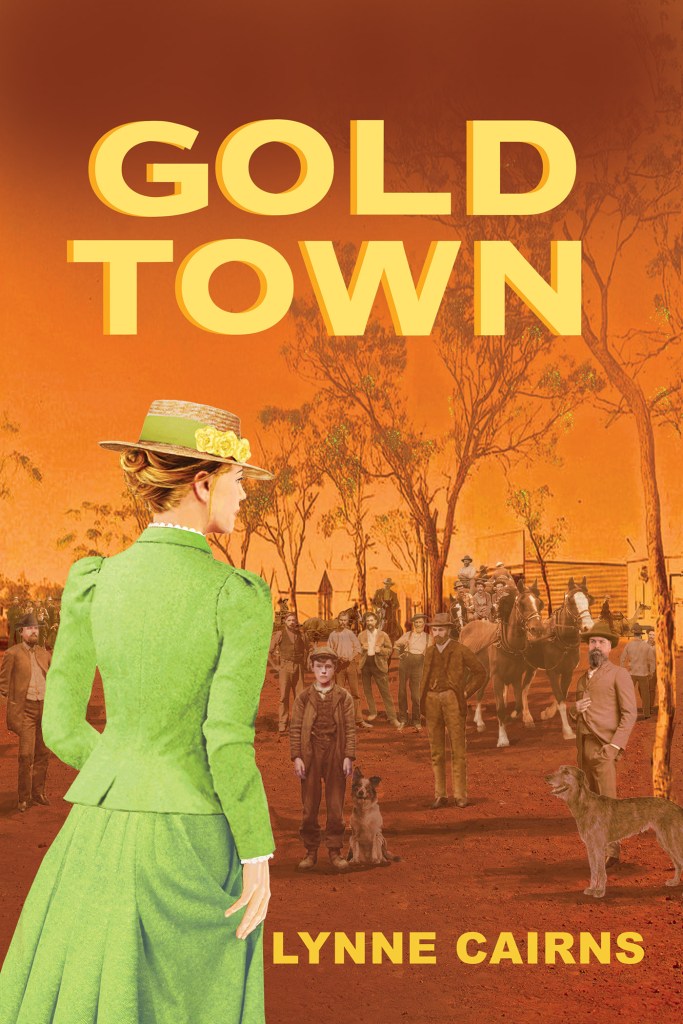
In the 1890s, rich gold finds in the rugged Western Australian outback, bring men streaming in from across Australia and the world. Nora Patterson’s husband Ned is one of them. When Ned strikes it rich, he asks her to come west to join him. Leaving Melbourne, she travels some 3,000 Kilometres by steamship to Fremantle and 600 more to the town of Southern Cross. After another two days in a crowded stagecoach, she reaches Hannans. But where is Ned?
A gold rush town full of hundreds of lonely, sex-starved men is a dangerous place for a woman alone and broke. She attracts some of the worst of these, but is befriended by Ben Drummond and Mary O’Callaghan, finding a refuge with Mary and her young son. While waiting and worrying that Ned hasn’t come, she finds work at the makeshift canvas and hessian hospital. But there is still no sign of Ned.
When murder stalks the town. Is Nora in Danger?
Now, to tell more would mean a few spoilers, so instead let’s look at the setting.
In the middle of the 1800s, poverty had driven many from their homelands to wander to the far corners of the Earth. Then, suddenly, riches beyond imagining seemed to be within their grasp, when gold was discovered in America’s west. Workers walked off their jobs and sailors deserted their ships. When word got out, men from all over the world headed for California. Those from Australia might as well have stayed home. In 1851, gold was found at Bathurst in NSW and Ballarat and Bendigo in Victoria. Scenes like those in California followed. Work stopped as men abandoned their jobs and headed for the fields, often leaving wives and children with no support. Again, ships were deserted in the harbours.
In a decade, Australia’s population grew by 207% and eastern Australia boomed, especially Victoria and its capital, ‘Marvellous’ Melbourne. As the easy gold ran out some were tempted to head for South Africa’s rich Transvaal finds, or WA’s new Pilbara and Murchison finds, but most were happy to stay put and enjoy the good times. But, in 1891, came the inevitable bust. Banks closed, businesses failed and unemployment soared. Men walked the street in ragged clothes or headed bush as swagmen on the ‘Wallaby Track’, to live off the land and do odd jobs for meals on struggling outback properties. Then, in June 1892, in Western Australia’s dry interior, Bayley and Ford struck gold at the place that became Coolgardie. Soon, men from all over the world began converging on the isolated colony and its even more isolated interior. New chums from Britain and the Australian cities joined tough old veterans of the Victorian and Californian gold rushes, to answer the allure of gold. Coolgardie was soon overrun with men from far and wide. Then in June 1893, some thirty miles to the east, Paddy Hannan and his mates found the place that would become Kalgoorlie, still a world source of the precious metal. ‘A perfect stampede’ was reported as men rushed out to Hannan’s Rush. Within a day, some 400 men had arrived. Thousands, from all over the world soon joined them. But, as the railway never got there until 1896, it was no easy journey. If you couldn’t afford to buy horses or rides on wagons, you walked, carrying your worldly goods or pushing a rough timber wheelbarrow.
Seeing the barren plains out there today, you would think anyone who set out on foot with no air-conditioned, four-wheel-drive vehicle, no refrigeration and only the water he could carry, was insane. However, these men were completely rational, but, unlike previous gold rushes, water was even scarcer than gold. Even veterans sometimes underestimated the semi-desert conditions. So, from time to time, prospectors found the remains of men who had perished of thirst. Not that these gruesome finds deterred those afflicted by gold fever.Hannans, still little more than a camp, was at the centre a wide area dotted with isolated gold finds, most not yet on any map, but some of which would become towns. The postal service could barely cope with mail, often simply addressed ‘care of the Post Office, Hannans, while the police were being asked to trace missing men. Of course, a late nineteenth century gold rush, with no phones, no electronic media, few newspapers and very slow travel, was a perfect place to hide from your wife, your creditors, or from the police themselves.
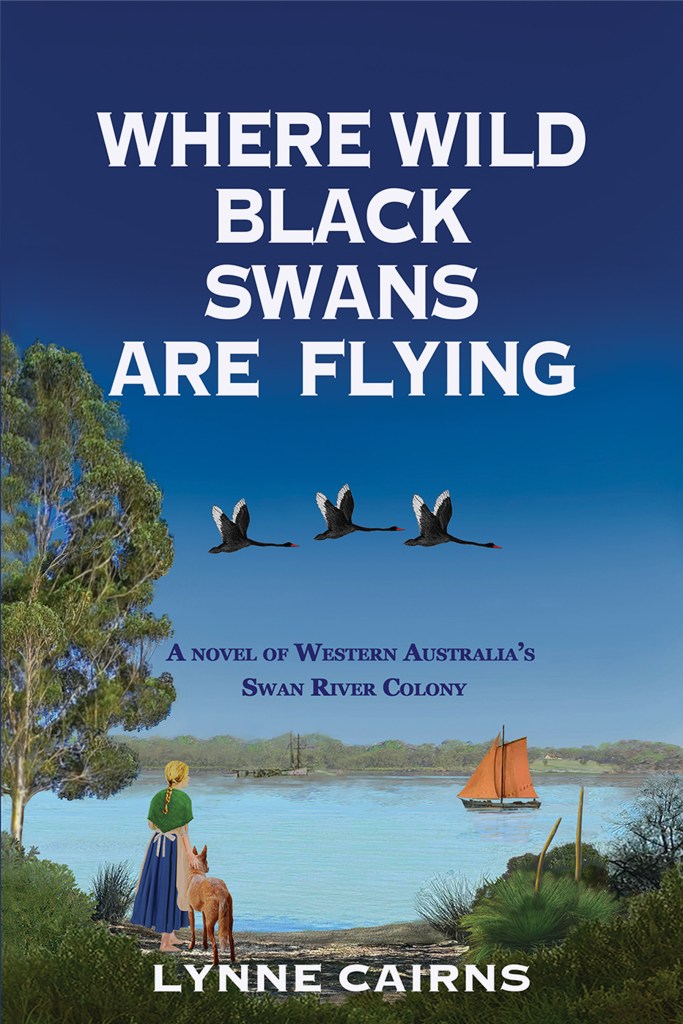
Becky arrived in the colony’s first years, as a babe in her mother’s arms. Ten years later she is alone, terrified and grieving, far from white settlements. Rescued by Indigenous people, she travels with them, learning the ways of the bush.
Returned to her own people, she finds a home near Peel Inlet with young widow Meg and her little boys. Life is a struggle on the remote farm, but they survive on fish and what they can grow. Becky grows into her teens, learns to fish and sail the little boat, and at 14, finds love.
When disaster strikes, Meg marries and they go to live beside the Canning River. The young lovers are reunited and Becky looks set to live happily ever after. But life is no fairy tale and fate has much more trauma in store.
A story of survival and adventure for young readers
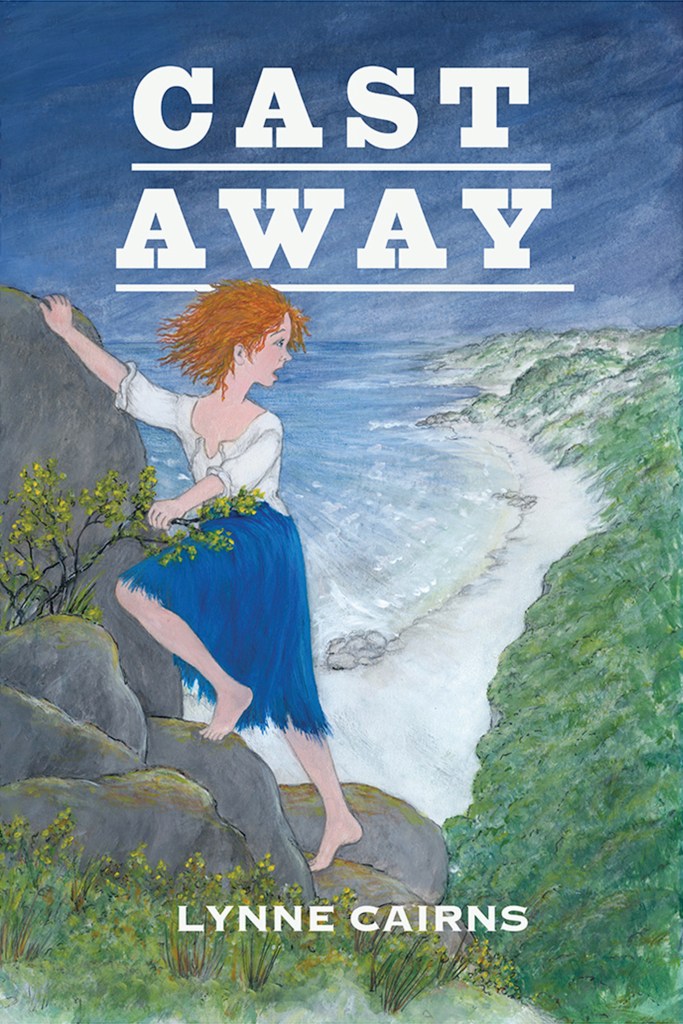
Cast Away is a children’s adventure story that has everything: shipwreck, remote survival, cross-cultural friendship, buried treasure, eviWhere Wild Black Swans are Flyingl villains, kidnapping, threats of torture, all against the stunning backdrop of Western Australia’s rugged south coast and virgin forests. Katie O’Donoghue, an eleven-year-old Irish servant girl, is the sole survivor of a shipwreck on an unexplored part of the south coast of Western Australia in 1834. Alone and lost on a lonely shore where few white people have ever walked, she searches in vain for a farm or village where she night find shelter, food and water. Can she survive in the wild? Can she trust the few people she meets and escape the evil men who think she knows where treasure is buried? This novel is for readers aged 10 to 14, who have a taste for adventure, but older teens might also enjoy it. Educational notes and maps are included.
And a true story about the World War II submarine base at Fremantle, Western Australia
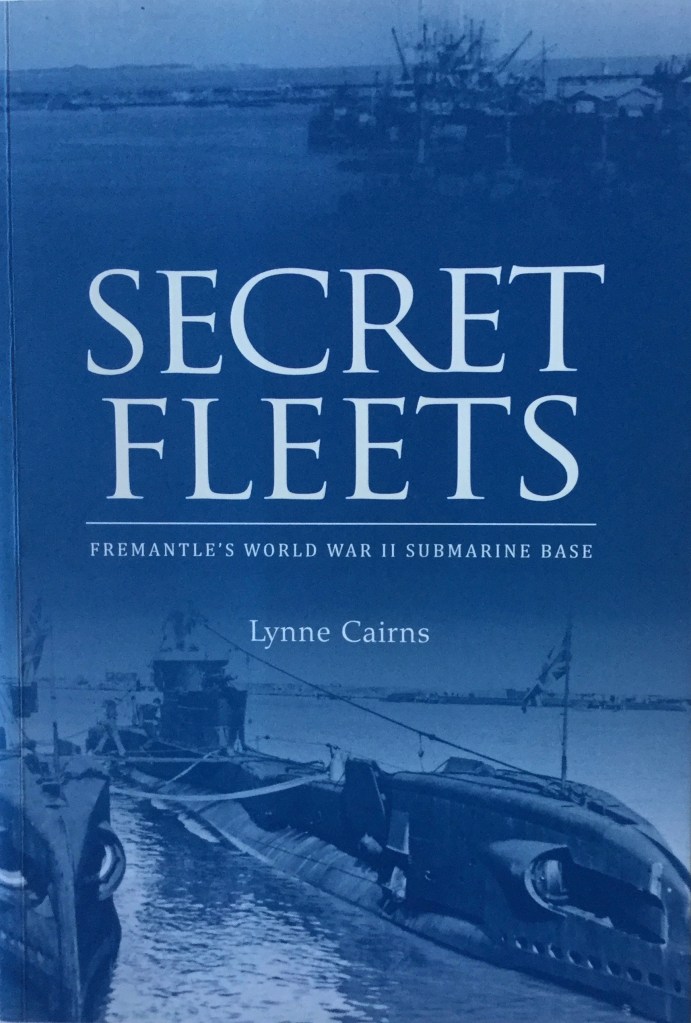
Secret Fleets tells Fremantle’s WWII submarine history. Some 168 submarines of the United States, British and Netherlands navies made a total of 416 war patrols out of Fremantle, Western Australia. It was the biggest Allied submarine base in the southern hemisphere. After Pearl Harbor, the Japanese seemed unstoppable. By March 1942, they held Singapore, Malaya and Timor. Port Moresby, on the southern coast of New Guinea, was under attack, and the Japanese were advancing in Bali, Java and Burma. Most of that territory was not reclaimed until 1945. Eight US submarines were lost while on patrol from Fremantle taking 570 submariners to a watery grave. In 1944, British and more Dutch submarines came to Fremantle.
Secret Fleets is published by The Western Australian Museum. It is available from the museum’s bookshops, other physical bookstores and online
 Lynne Cairns