Call us they said. We are here to help you 24/7. And so, I rang their number and waited. Then waited again as a mechanical voice told me, at length, how wonderful their organisation was at protecting my privacy and how I mustn’t abuse the staff.
Hearing another voice, I was about to explain why I had called, but no, this was just another robot telling me I should press one, for nothing I needed to know. Two and three were no more helpful, nor were four or five, and so on to eight, where if I needed any real help, I should hang on and wait. Of course, now I needed to be told once more about their policies of privacy and that I mustn’t abuse the staff; that I was in a queue and would need to wait for approximately half an hour.
In the meantime, I heard how great they were at protecting themselves from accusations of infringing my privacy and, by the way, I mustn’t abuse the staff. This information was repeated on an endless loop interspersed with a loud mechanical noise that I believe was music. After I had endured this for almost an hour, a disembodied electronic voice informed me that they really were too busy to answer my call at all.
Next day, I girded my loins then tried again. After a repeat performance of yesterday’s annoying process, I finally did get to speak to a human. Having been warned about abuse I restrained myself from telling the poor guy what I thought of their organisation and explained my problem. After very politely ascertaining my name, my date of birth, my mother’s maiden name and the name of my first pet, he sadly informed me that he could not help me. I would need to contact another department, so I was put on hold. After I had endured another five minutes of deplorable music, he returned to say that I could not be connected and advised me to call the original number. Where, of course, someone was there to help me 24/7.
From the Meekatharra Miner, Saturday 22 September 1917. .
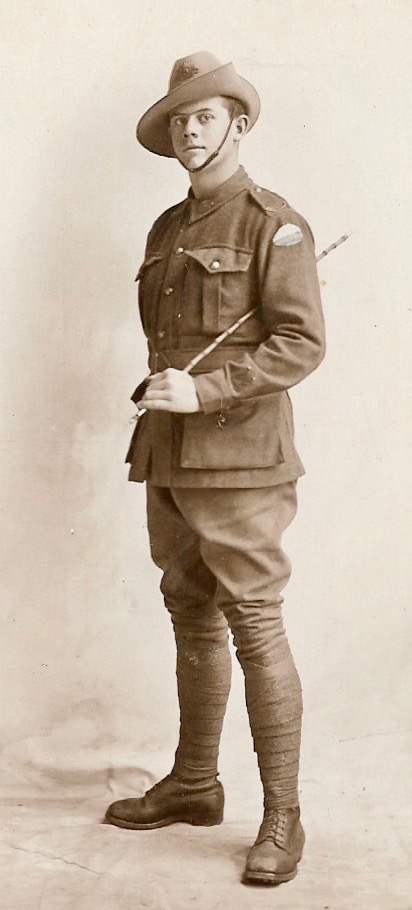
‘Extract from letter received by Mrs. J. E. Coombes from her son, Private Russell Wheeler, No. 413, 44th Battalion.’ (Of course, the letter home doesn’t tell the full horror of the trenches)
‘I take this opportunity to tell you about the “Big Push.” that I have just come through safely, thank God. I am not allowed to mention places, but you will know the advance I am referring to. I can say it was in Belgium, and the whole ridge is named after the town. Although the Australian boys had a large part to play they were hardly mentioned in the papers, and it was the New Zealanders, and not the Irish, who took the town. My Battalion was in a huge dugout when the big mines were blown up. Just at daybreak we were awakened by a terrific explosion, closely followed by two more just as severe. Then our guns, which had been fairly quiet for a time, opened up like a thousand peals of thunder rolled into one. This kept up for several hours, and our hearts were gladdened by good reports of success. We were kept in our super-dugout all that day and till midnight, when we were called upon to go out and capture a certain portion of ground for the new front line. We had to go through the land that had been occupied by the Huns some twenty-four hours previously, and you would have to see that land to realise what a hell our barrage must have made it for ”Fritz.” For about a mile and a half the ground was a barren desert full of shell-holes from three to eighteen feet in depth, and so close together that the edges were touching. This is supposed to be the greatest artillery battle the world has ever seen, and I can quite believe it, as I fail to find words to describe how the British guns devastate everything before them. We were the right pivot of the advance, and our left was a few hundred yards south-east of the town, or rather the heap of broken bricks that had once been the town. Eventually we reached the new front line, and our boys went on and captured another fair slice of Fritz’s land ; but about mid-day old “Fritz” began to put a H.E. barrage on us. This lasted ten hours, and I am still wondering how we came out of it so well. One would think that nothing could have lived through it. Another chap and I lay down in a shell-hole, and slept through part of it ; we were thoroughly exhausted. All this shelling, however, was of no use. He could not move our line an inch.
Next night he tried his luck with gas shells, with no better results.. Between the new front line and the support line the enemy lay dead in heaps, evidently having been caught in our awful artillery barrage. Nothing on earth could stand it for long. Fritz surrendered in hundreds and seemed pleased to be out of it. They seem to be absolutely demoralised, and never seemed to put up much of a fight with our infantry. I had occasion to take messages to the front line through a couple of fierce barrages of H.E. and machine gun fire, and although in full view of Fritz’s line, I never sustained as much as a scratch, for which I thank God. At present we are out for a spell — some miles behind the line — and but for the occasional growl of the guns there might be no war on at all…’
A few weeks later, Russ Wheeler was severely wounded at Passchendale. Fortunately, he survived and came home but suffered all his life from the effects of that serious wound.
Today, Australia ranks second only to China as a gold-producing country. And much of that gold still comes from Western Australia, which was still an isolated British colony, less than sixty years old, when the first gold finds were recorded.
In the middle of the nineteenth century, when poverty drove many from their homelands to wander to the far corners of the Earth, suddenly the dream seemed to be within their grasp. In mid-century, gold was discovered in America’s west. Local workers walked off their jobs and sailors deserted their ships. When word got out, men from all over the world headed for California.
Those from Australia might as well have stayed home. In 1851, the Australian gold rush began with rich finds at Bathurst in NSW and Ballarat and Bendigo in Victoria. Scenes like those in California followed. Work stopped as men abandoned their jobs and headed for the fields, often leaving wives and children with no support. Again, ships were deserted in the harbours.
By 1860, Australia’s population increased by over 207 percent and eastern Australia boomed, especially Victoria and its capital, ‘Marvellous’ Melbourne. As the easy gold ran out some were tempted to head for South Africa’s rich Transvaal finds, or WA’s new Pilbara and Murchison finds, but most were happy to stay put and enjoy the good times.
Then, in 1891, came the inevitable bust. Banks closed, businesses failed and unemployment soared. Men walked the street in ragged clothes or headed bush on the Wallaby Track, to live off the land and do odd jobs for meals on struggling outback properties.
Then, in June 1892, in Western Australia’s dry interior, Bayley and Ford struck gold at the place that was to become Coolgardie, collecting two thousand pounds worth in one evening. Within weeks, another three thousand ounces of alluvial gold were found. And the rush was on. with men from all over the world converging on the isolated colony and its even more isolated interior. Newchums from Britain and the Australian cities joined tough old veterans of the Victorian and Californian gold rushes, to answer the allure of gold.
Coolgardie was soon overrun with men from far and wide. Within a few months, a town was established , albeit an ephemeral one made from canvas and hessian.
Then in June 1893, Paddy Hannan and his mates arrived in Coolgardie, having picked up off the ground some seventy ounces of alluvial gold. As the papers reported ‘A perfect stampede’ began. By the next morning Coolgardie was practically deserted and it was estimated that 400 men would arrive at the new rush, already being called Hannan’s Rush, during the day.
Rain had been falling continuously for the past twenty-four hours and it was reported that water was plentiful within eight miles of the new find. That situation wasn’t to last long. The eastern goldfields is not a place of wet winters, and by summer, the situation was dire. Extreme heat and water shortage made life unbearable and an exemption was granted during the hot summer months to allow men to leave their claims without forfeiting them, so they could head for the cooler coast.
As it was 1896 before the railway line from the capital, Perth reached Coolgardie and Kalgoorlie, it was no easy journey from the ports of Albany and Fremantle. Some could afford to buy horses or rides on wagons, but many walked, carrying their worldly goods or pushing wheelbarrows, often knocked together from bush timber.
Today, seeing the barren plains, dotted with ghost towns, that surround Kalgoorlie, one would suppose that anyone who set out on foot with no air-conditioned, four-wheel-drive vehicle, no refrigeration and only the water he could carry, must have been insane.
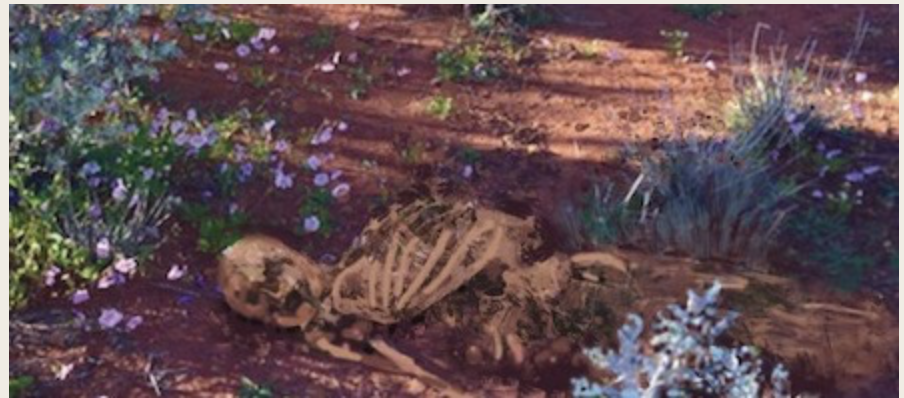
Most of these men were completely rational, however. But, unlike previous gold rushes, water was even scarcer out there than gold. Even veterans sometimes underestimated the semi-desert conditions. So, from time to time, prospectors would come upon the decaying remains of men who had perished of thirst. But these gruesome finds deterred few of those afflicted by gold fever.
With so many diggers streaming into the new goldfields, it was hard to keep track of them all, and government agencies were soon stretched to the limit. At Hannans, still little more than a camp, with canvas or hessian-covered buildings straggling along either side of the road to Coolgardie, even the Post Office and Police Station were just tents.
Very soon, the police were being asked to trace missing men, but the places prospectors were heading were yet to be found on any map. I remember finding, in a Post Office Directory of the time, an address listed as ‘Harder to Find’. I assume it was a humorous name for a gold find, but perhaps it was simply the truth. At best it would have been like trying to find a needle in a haystack, and there were some who didn’t want to be found. A late nineteenth century gold rush, with no phones, no electronic media, few newspapers and very slow travel, was a perfect place to hide from your wife, your creditors, or from the police themselves.
Meanwhile, the postal service could barely cope with all the letters and parcels, often simply addressed ‘care of the Post Office, Hannans’. But Hannans or Hannan’s Find, as Kalgoorlie was called at first, was at the centre of a wide area dotted with isolated gold finds, some of which were later to become bustling towns. Food supplies were also to be a problem. In June ’93 flour and oatmeal were selling at Coolgardie for a shilling per pound and a ‘ tucker ‘famine was said to be imminent.
It was to be another nine years before, thanks to the genius of C Y O’Connor, water was brought the 530 kilometres from Mundaring Weir in the hills near the capital, Perth. Even in the winter, when the creeks ran, clean water was in short supply because the diggers muddied the creeks, so cleanliness was difficult. Sewage was not disposed of in a sanitary fashion, and disease was common. There were a few doctors or chemists at the diggings, but not all were qualified. Many people died of diseases such as dysentery or typhoid.
This was a time long before power tools. Work was done with a pick and shovel, so prospecting and mining was hard, dirty work and, with no water to wash clothes, the men could only try to beat the red dust out of them. Most took Sunday off and tried to tidy up a bit, trimming beards, washing faces and hands and shaving in tiny amounts of water.
Until the railway finally reached Coolgardie and Kalgoorlie in 1896, everything, food, building materials, and – after the big mines got going, heavy mining equipment – had to be transported hundreds of kilometres into the dry interior from Fremantle (600 km away), Albany or Esperance by camel or donkey trains, or wagons pulled by horses. The extra width of Coolgardie’s Bayley Street echoes the problems of turning camel trains.
Integral to the economic development that occurred during this period was the appointment of C.Y. O’Connor as engineer-in-chief for a large government capital works programme. In this period of rapid economic growth, unprecedented levels of public infrastructure expenditure (which was previously restricted through lack of revenue) took place. The Goldfields Water Supply scheme (via a pipeline from Mundaring Weir to Kalgoorlie) is perhaps the best known, but the development of the Port of Fremantle opened up the State’s export capacity.
The development of railways during the era of the goldrush was also important, with the extension of the line to Kalgoorlie in 1896, making the Goldfields more accessible. Demand for railway line sleepers provided a significant boost to the local timber industry. Nevertheless, while exports of other commodities (such as wool and timber) increased over the period, the economy was still predominantly driven by gold, which comprised 61% of total exports in 1901.
If you’ve been at all interested in discussions of those drastic events of recent years, like September 11 or the financial crisis of 2008, that have shaken the world economies and had repercussions for ordinary people like you and me, I’m sure you will have heard the expression ‘Black Swan Event’, something world-shaking that is unexpected and hard-to-predict from historical or technological precedents.
So, what’s wrong with being a black swan? Here in Western Australia, where they are the only swans you are likely to run into, we take them for granted, and they are so tied up with our connection to our special part of the world that the black swan is our state emblem, even though they are found all over Australia.
The idea of a black swan symbolising some strange and unforeseen occurrence can be traced far back into history, because all the swans Europeans knew were white, until Dutch explorers sailed down Australia’s west coast, long before Captain Cook.
Until then they were only known to our Indigenous people. For the early colonists, they probably seemed just another strange thing they had to learn to live with. That is why my second novel set in Western Australia’s Swan River Colony, has the unwieldy title Where Wild Black Swans are Flying.
Before the Anzac landing at Gallipoli in Turkey, then part of the Ottoman Empire and allied to Germany, Britain wanted to force a way through the Dardanelles, the narrow strait connecting the Aegean Sea and the Sea of Marmara, and attack the Turkish capital, Istanbul. In March 1915 a large Allied fleet failed to achieve this end, leading to the decision to attempt a land offensive on 25 April 1915, a day indelibly imprinted on the Australian psyche.
However, just days before the Gallipoli landing, the Australian submarine, AE2, was ordered to slip through the Dardanelles and disrupt Turkish shipping in the Sea of Marmara during the Allied assault. Besides creating a diversion, it was hoped that if the mission were successful other submarines could follow to harass Turkish shipping and prevent enemy reinforcements being sent to the front. Previous attempts by British and French submarines had failed.
Early on that first Anzac Day, 25 April 1915, AE2 began to creep silently through the strait. A few hours later, the submarinereached Chanak, where the strait is at its narrowest, and torpedoed the Turkish gunboat Peyki Sevket. But, while trying to avoid an enemy destroyer, it ran aground right under the guns of a Turkish fort. Despite a second grounding, AE2 safely reached the Sea of Marmara to become the first Allied vessel to pass through the Dardanelles.
Meanwhile, the initial landing at Gallipoli had exposed the Allied troops to devastating enemy fire. The Anzacs, facing an entrenched enemy, had difficulty advancing far up into the ridges and ravines. The divisional commanders on the ground, seeing the situation was bad, sent a message to General Birdwood, in command of the Anzac forces, suggesting a strategic withdrawal. General Hamilton, the British commander, was discussing the suggestion with his senior officers when the report of AE2’s success reached him.
The general hesitated to withdraw before the campaign was really under way, and the prospects of getting the troops out safely and efficiently were not promising. His ‘… dig, dig, dig …’ message to Birdwood has often been quoted. The important part of the message explained that it would take at least two days to re-embark the forces, but the news that AE2 had got through would have cheered the troops.
Over the next four days, Turkish ships hunted the little submarine. Then the torpedo boat Sultanhisar damaged it so seriously that it was necessary to abandon ship. AE2 was scuttled and the captain and crew were taken prisoner, enduring three and a half years in captivity, during which time three men died.
Unlike the British submarines that followed, AE2 was unable to return in triumph, and the fact that it was an Australian submarine that first forced a passage through the Dardanelles seems to have been forgotten.
Taken from Secret Fleets, Lynne Cairns (Western Australian Museum, 2011)
It’s been a long time. But I’ve never really gone away. Just life got in the way of my plans, as it tends to do. Anyway, I’ve finally finished the book I was talking about last time I posted something. It’s an outback historical mystery with a touch of second time around romance.
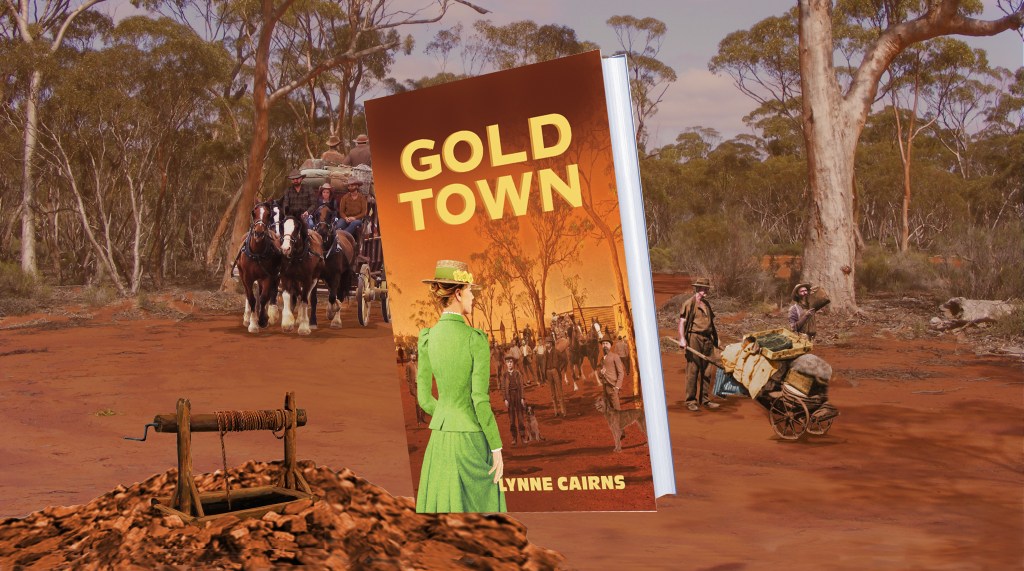
Gold Town: A tale of Australia’s real Wild West.
It’s 1895. Marvellous gold finds, far out in the rugged West Australian outback, bring men streaming in from across Australia and the world. Nora Patterson’s husband Ned joins the rush and is one of the lucky ones.
Ned writes to tell Nora the good news, asking her to join him. So, she leaves Melbourne to sail over 3,000 kilometres to Fremantle. It’s over 600 more kilometres to her destination and the train only goes part of the way. After another two days in a crowded stagecoach, she reaches the shanty town of Hannans, now Kalgoorlie. But where is Ned?
Alone and broke, Nora is befriended by Ben Drummond and widowed Mary O’Callaghan. She finds work at the makeshift hospital, but Ned still doesn’t come. And an unseen danger stalks the town. When murder strikes, is Nora in danger? And can Ben save her?
The book is due for release on 2 April 2025. It will be available from Amazon and other online bookstores. The RRP is $29.99, but I will have copies available for sale at a reduced price, plus postage. See my Home Page for more information.
I’m sorry it’s been so long since I’ve posted anything here, but over the last year, writing ceased to be a priority in my life and, as Robert Burns said ‘the well laid plans of mice and men aft gang agley’ (or ‘often go astray’ for those not familiar with the Scots way of putting things).
Towards the end of last year I thought my historical novel set in the Western Australian gold rush of the 1890s was nearing completion, but I find I still have some tinkering to do.
The story starts as I’d intended, with a young woman arriving at the place that was to become Kalgoorlie, hoping to meet her husband, but the trouble with writing fiction is that the people you invent tend to have minds of their own.
So I’ve spent the last few years trying to control a cast of annoying fictional characters who insisted on leading me astray, far from the simple murder mystery I planned. Even my murderer is now clamouring for attention. He wants more of his story in the mix. Can’t shut him up, but I’m afraid if I give in to the temptation to elaborate on his backstory, I may be letting myself I for a complete rewrite.
Oh, well, I guess I’d better buckle down and get on with it. I still don’t have a title though the working title is Gold Dust to Dust.
The sky pales from indigo to apricot. Fiery fingers flicker on the horizon, rimming rugged ridges with flame, glinting gold on quartz and quartzite, and painting the mulga trees vermilion. As the sun’s heat draws moisture from land and leaves, indigenous birds and marsupials, wise in the ways of this ancient land, retire to shady places to await the cool of evening.
This Western Australian outback environment had, for millennia, supported human beings and the unique creatures of this land. But the red earth held something the new people would fight and die for. It lurked in the structure of the soil, in veins and lodes, deep in the earth, and in glittering grains and gravels along water-washed gullies. Gold! That fabled symbol of wealth, traditionally seen as beyond the reach of all but kings, noblemen and, possibly, pirates.
In 1892, Bayley and Ford struck gold at Coolgardie, collecting two thousand pounds worth of gold in one evening. Then, in June 1893, Hannan and Flanagan made the rich discovery at what was to become Kalgoorlie, and the rush was on. By August 1893, there were 1500 miners there, 400 at Coolgardie, and about 500 more scattered through the outback. With no railway until 1896, it was no easy journey from the ports of Albany and Fremantle. Those who couldn’t afford to buy a horses or a ride on a wagon, walked, carrying their possessions or pushed rough, wooden wheelbarrows. This is the setting for my work-in-progress, a murder mystery/romance novel. I had been calling it ‘Gold-dust to Dust’, but the latest Working title is just ‘Goldtown’.
We may call it Remembrance Day, but the true name of November 11 is Armistice Day. It commemorates the signing of the armistice between the Allied nations and Germany in 1918 that led to the end of the Great War. So, what we are celebrating today is not about war. It is about peace.
And while we mourn the dead of the many wars since that ‘War to end all War’ as it was called, we should try to imagine what that date meant to people in 1918. It was a day of hope. Hope that the long, terrible, unnecessary destruction of young men would stop. That life would return to some semblance of normality. Where fathers and sons, brothers and sisters could come home to their families at the end of each day.
But, as we know, the Great War was not to be the war to end all wars. Between 1939 and 1945, it was referred to as ‘the last war’. And when that second great world war ended in 1945, the ‘Great War’ became ‘World War I’, pushed into the past by the new horrific memories of World War II.
But those are just the big wars that cast their shadow over the whole world. There have been numerous other wars, and many continue to simmer away as civil conflicts. We are no closer to world peace than we were on November 11, 1918. So, while we remember and honour our own fallen, spare a thought for all the other victims of war.
I’m wondering whether our Prime Minister has actually done the sums when it comes to this new AUKUS submarine deal. And I’m not just talking about money. It seems we won’t get these submarines for 20 years. That takes us to 2041. Then, the expected lifetime of these subs is 35 years – 55 years in all. So, do we intend to rely on these subs to protect us until 2076?
But a lot can happen in that time. Fifty-five years ago, Australia had just ordered its British Oberon-class submarines. The first, HMAS Oxley (2), arrived in 1967. Obsolete some 20 years later the Oberons were replaced by the Collins class. Now past their use-by date, they are expected by the government to keep us safe for the next 20 years, with a little help from leased boats from elsewhere.
Given the speed with which technological advances are occurring, these new nuclear submarines could be obsolescent even before we get them. The development of driverless vehicles, trains and planes suggests that future submarines could be unmanned, affecting design. No doubt the equipment on board a sub is, like just about everything else, controlled by computers. How long will submarines be able to evade digital surveillance? Could they possibly be vulnerable to digital attacks?
So, can we assume that submarines will remain the stealth vehicle of choice for the world’s navies for the next 40 to 75 years? We already have other forms of stealth weapons. Drones, for instance can be used for surveillance and even weapon delivery. Satellites monitor just about everything on Earth. Will they, sometime in the future, be able to detect the electronic footprints of submarines?







 Lynne Cairns